Real Estate Website Design
Real Estate Web Design Services Built to Convert
Your website should do more than look polished. Codflux creates connected digital experiences that help real estate professionals present their brand, support property discovery, capture buyer and seller interest, and move inquiries into an organized follow-up process.
More Than a Website: A Connected Growth Asset
1
Technology
Custom Design Around Your Brand
Build a clear, credible digital presence shaped around your market, audience, listings, services, and next-step goals—not a generic agency template.
2
Strategy
Search and Conversion Planning
Connect page structure, search intent, calls to action, property search, and content so visitors can find useful information and act with confidence.
3
Results
Lead Capture With a Clear Path
Plan forms, routing, CRM connections, and response workflows together so new inquiries reach the right person and receive consistent human follow-up.
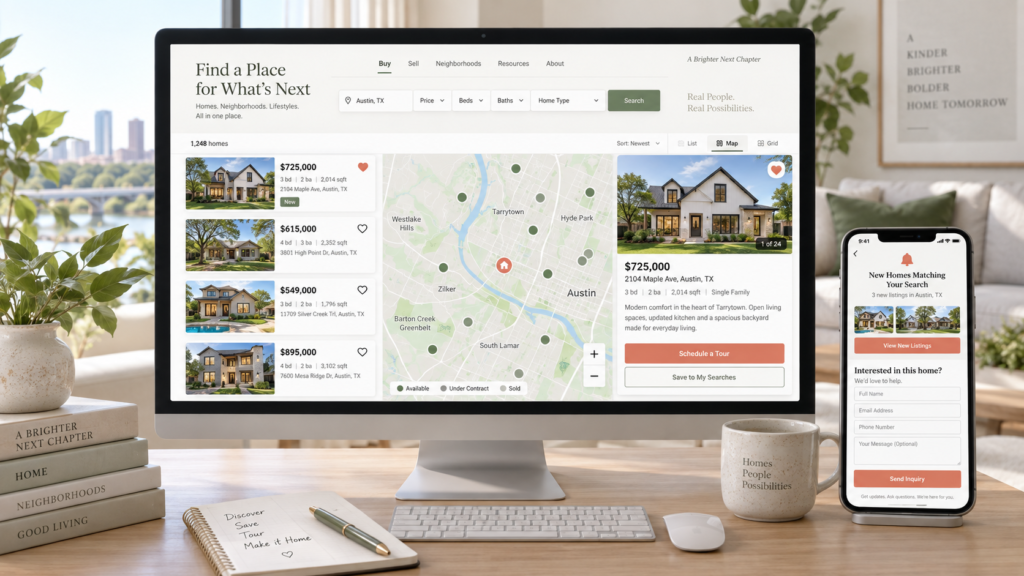
IDX Search Designed Around the Buyer Journey
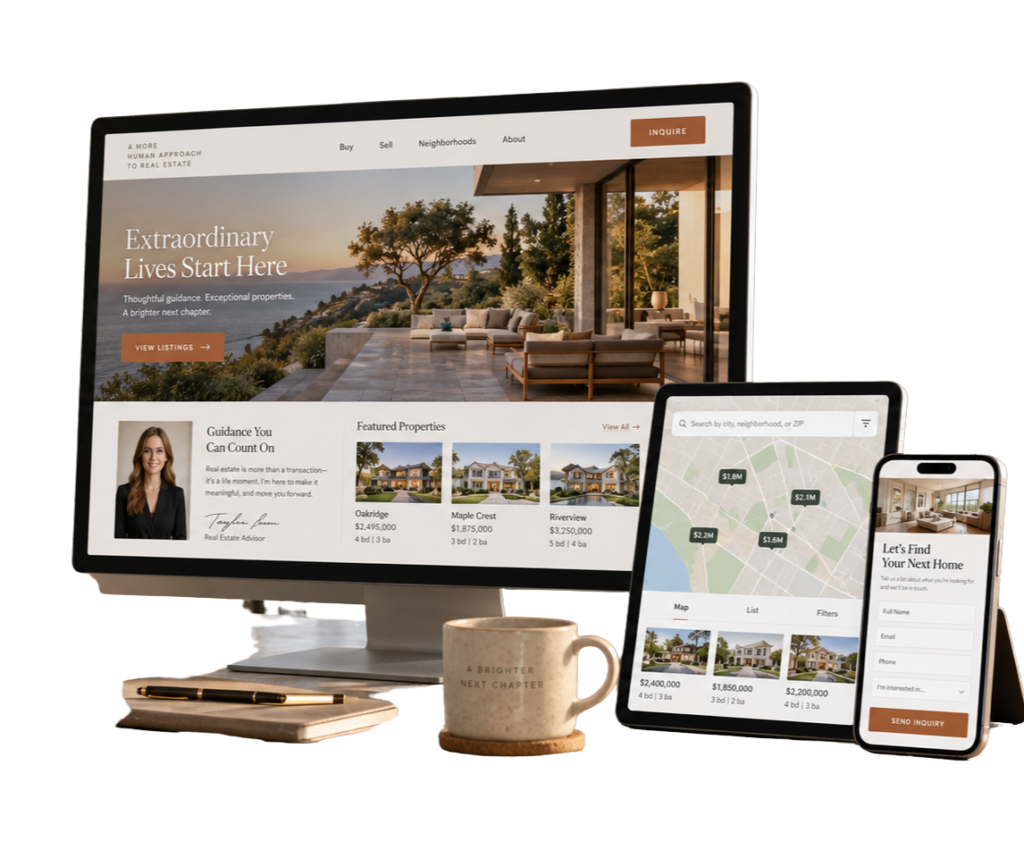
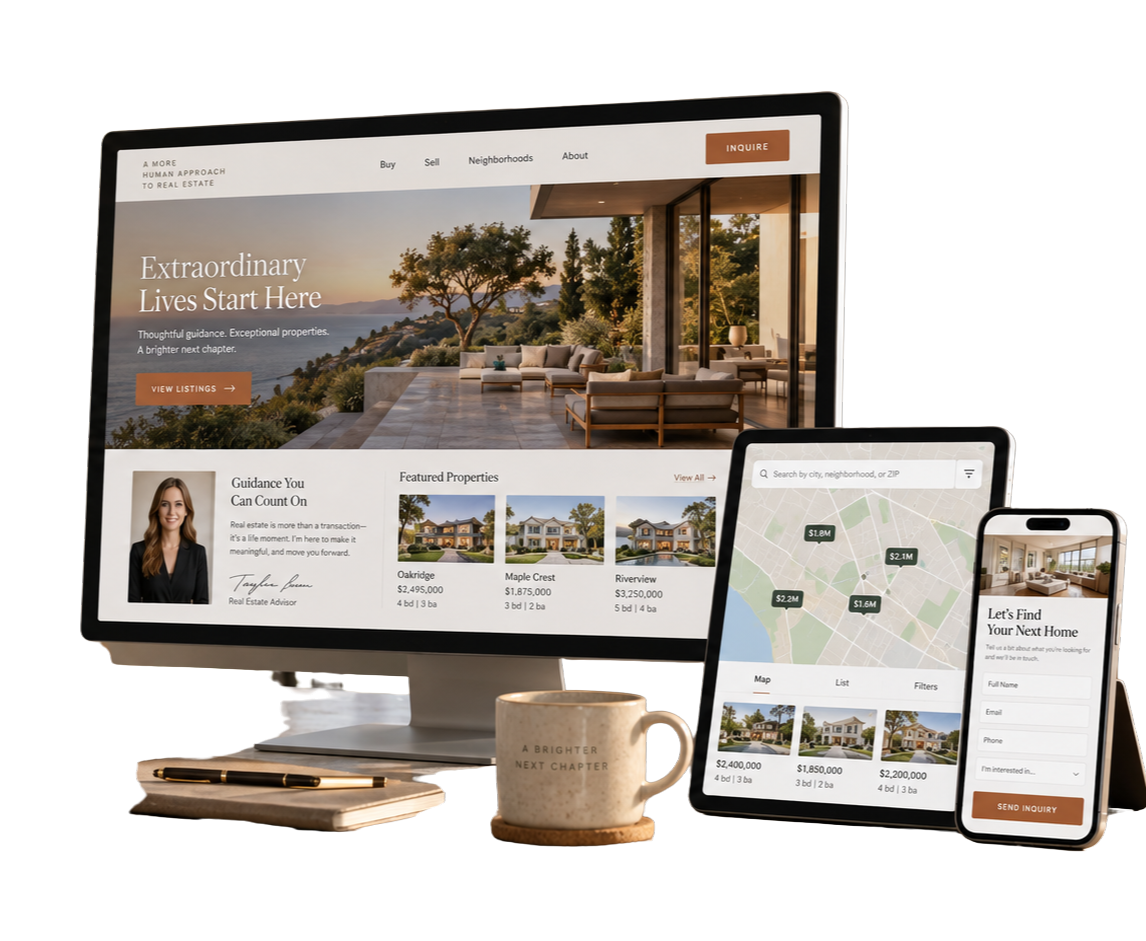
Give visitors a practical way to explore listings while keeping your brand at the center of the experience. Search filters, map views, listing pages, saved-search options, and lead capture can be planned around the selected platform, IDX provider, MLS rules, data availability, and approved integrations.
Website Design for Agents, Teams, and Brokerages
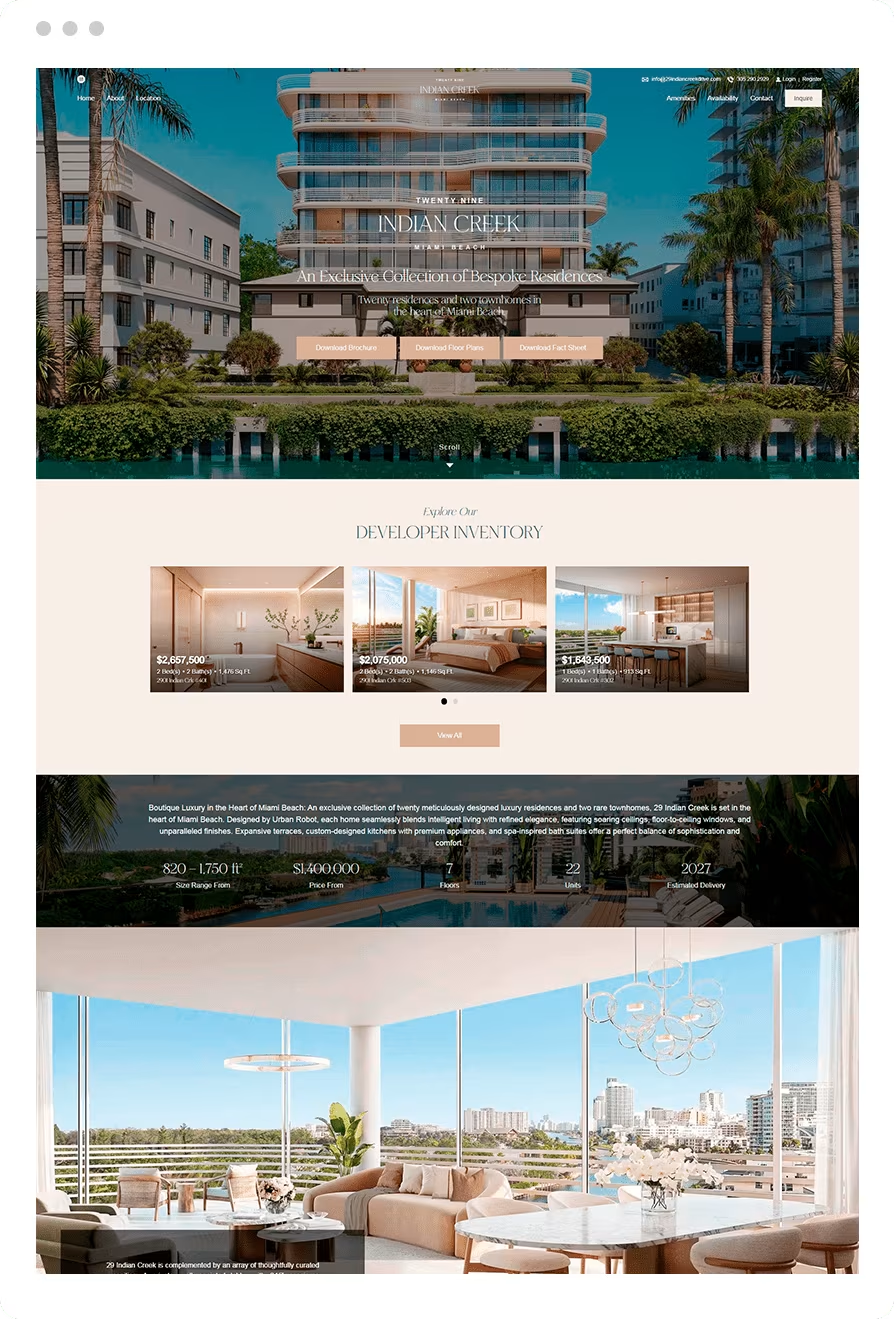
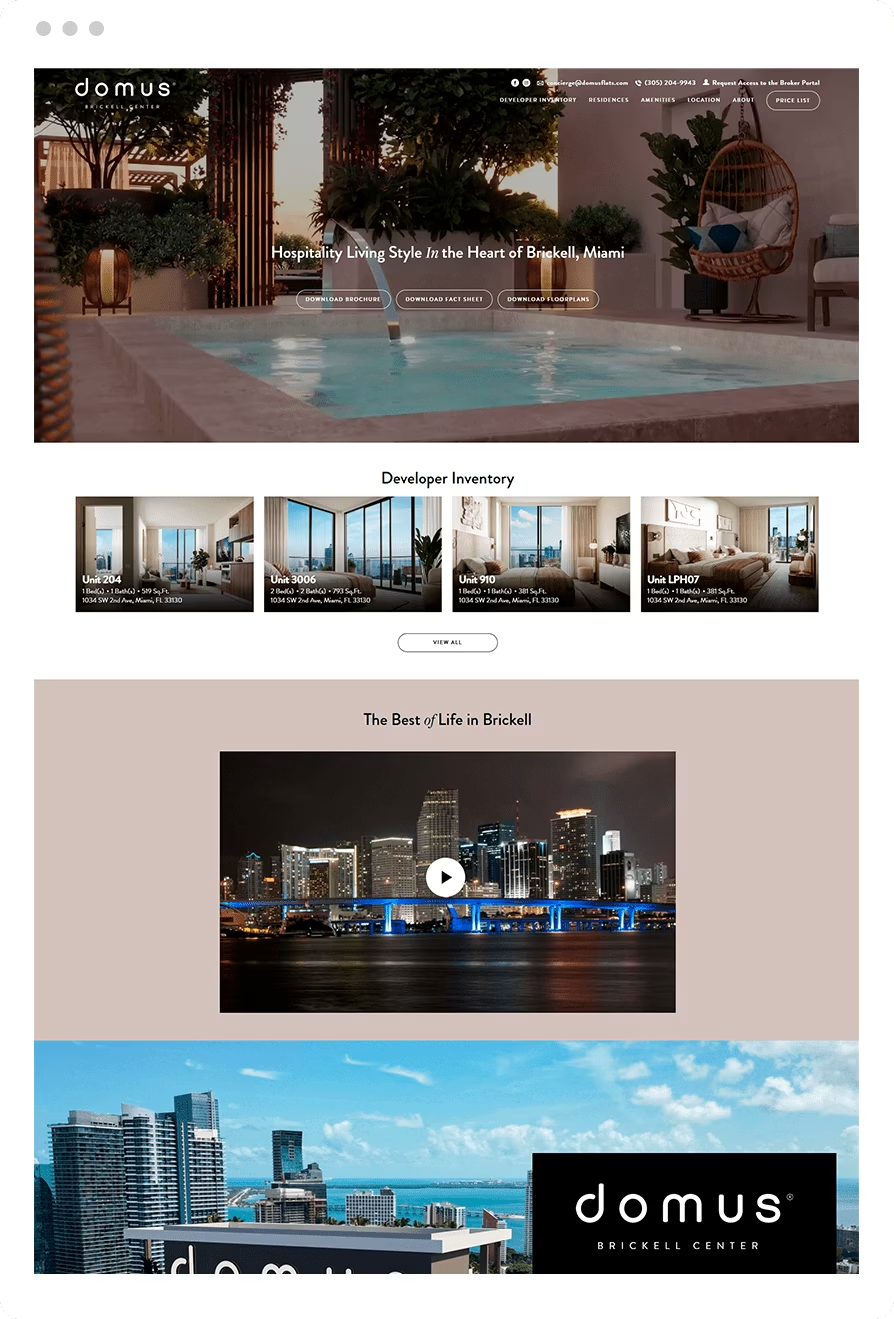
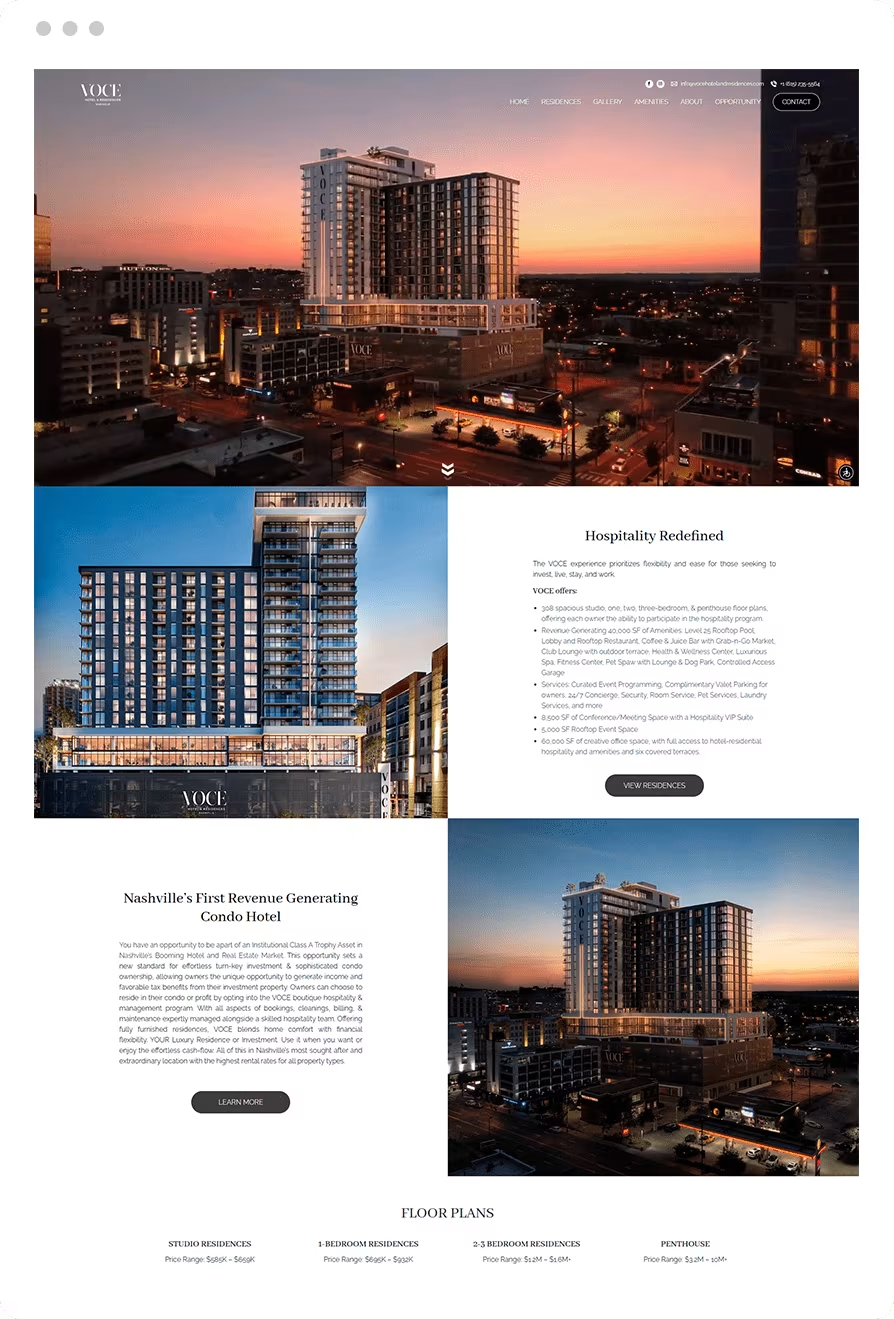
Whether you are building a personal brand, expanding a team, or coordinating a brokerage, Codflux is a real estate web design company creating website design for real estate businesses that need clearer positioning and a stronger path from traffic to inquiry. Review selected examples to see how structure, messaging, property discovery, and conversion points can adapt to different business models.
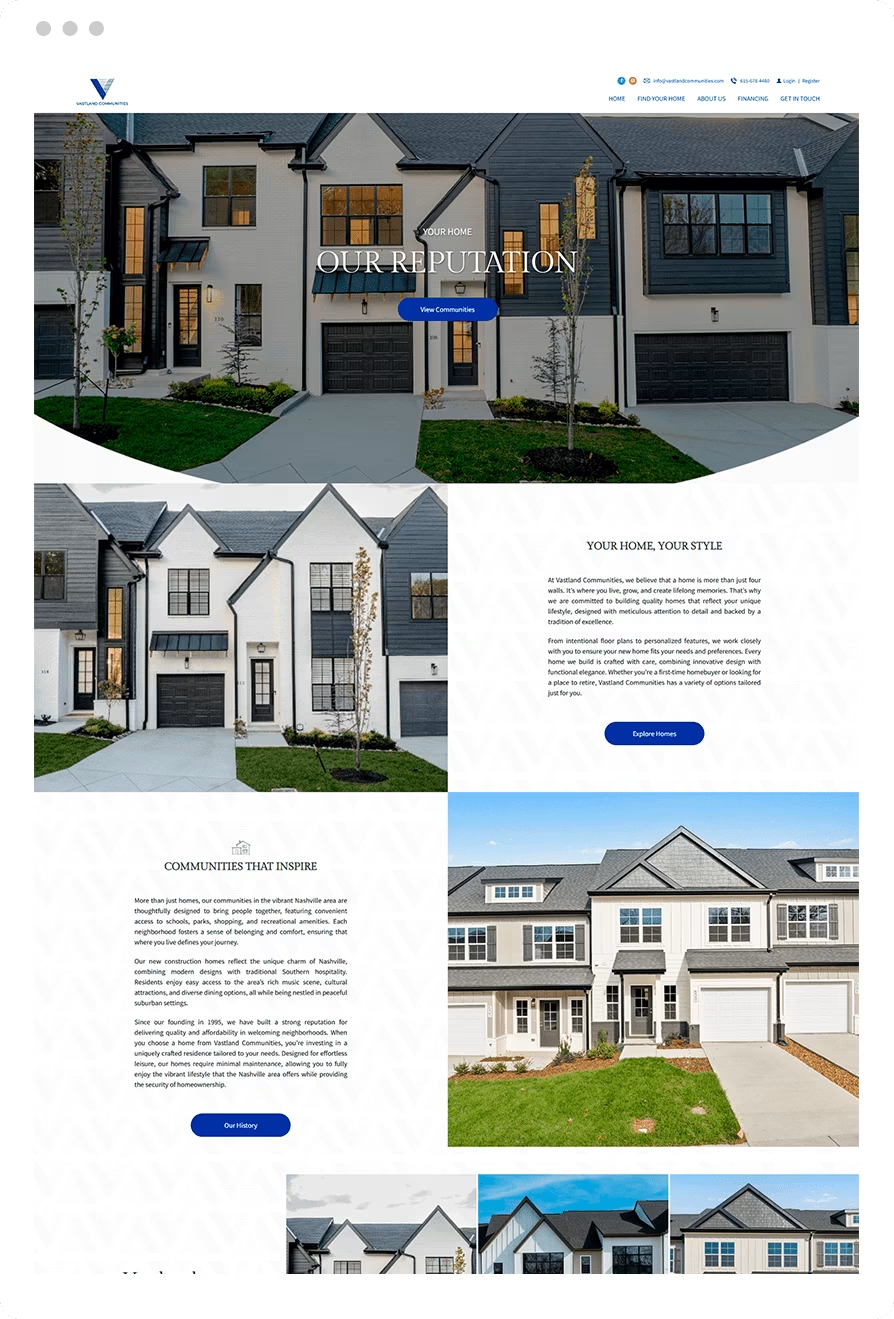
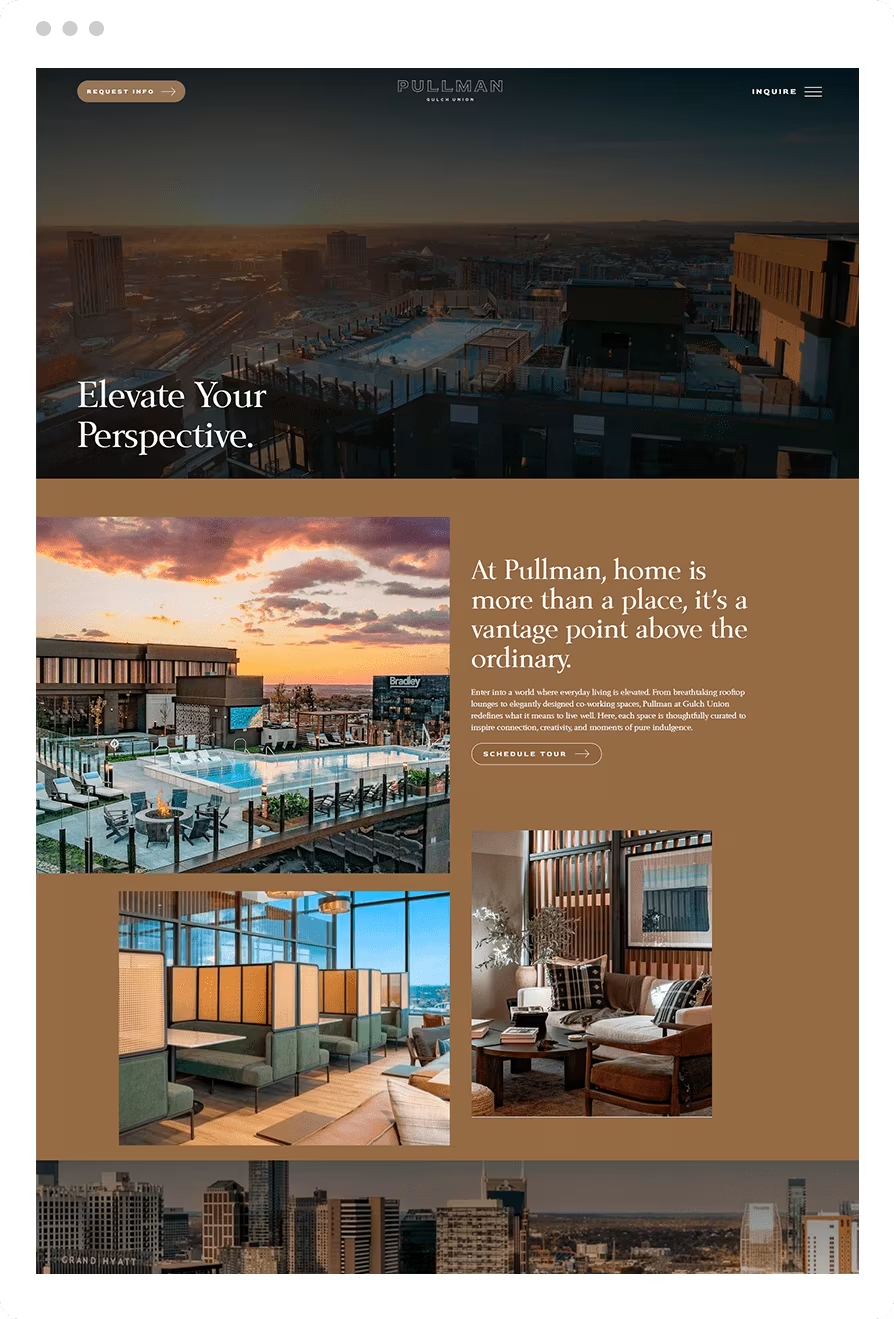
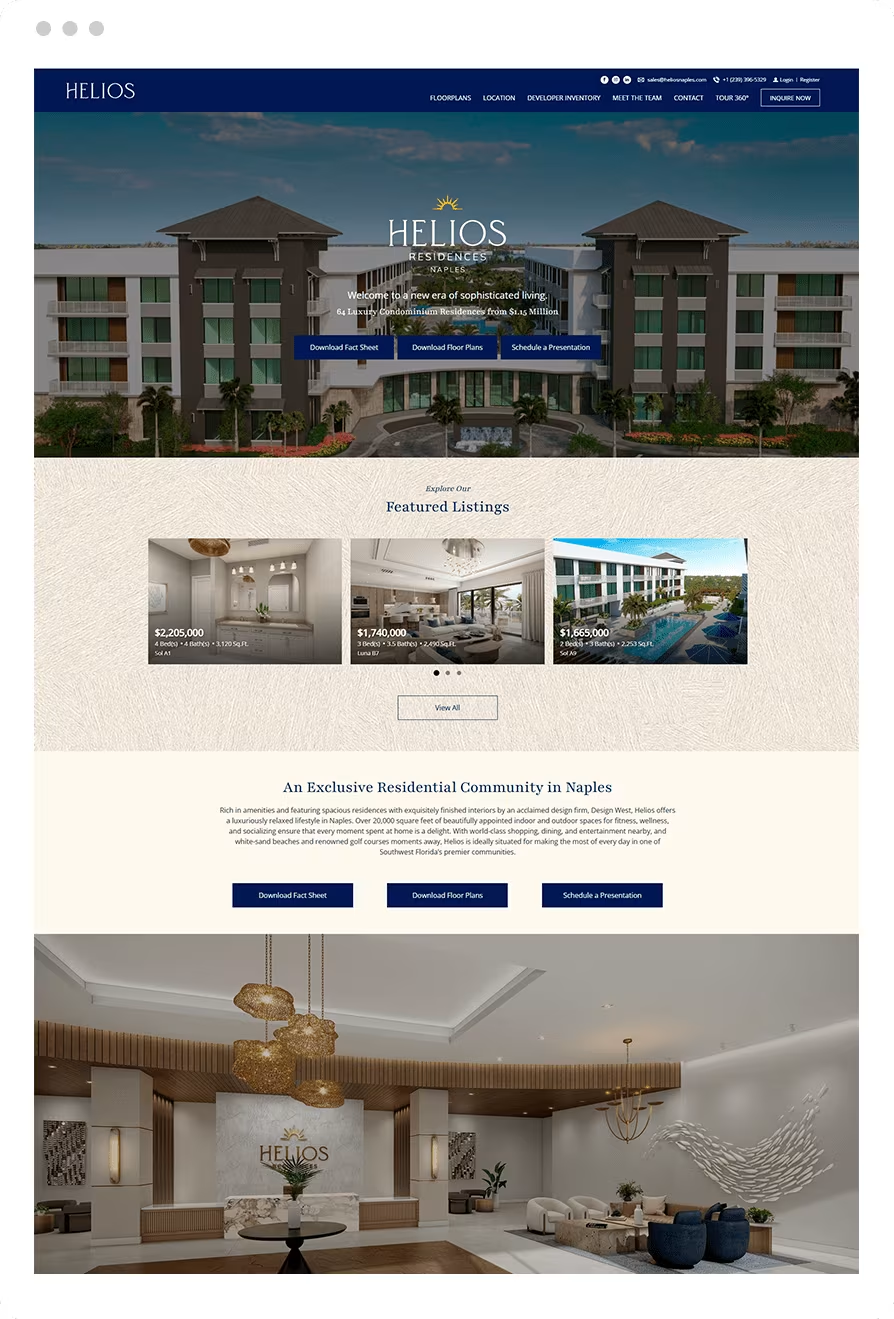
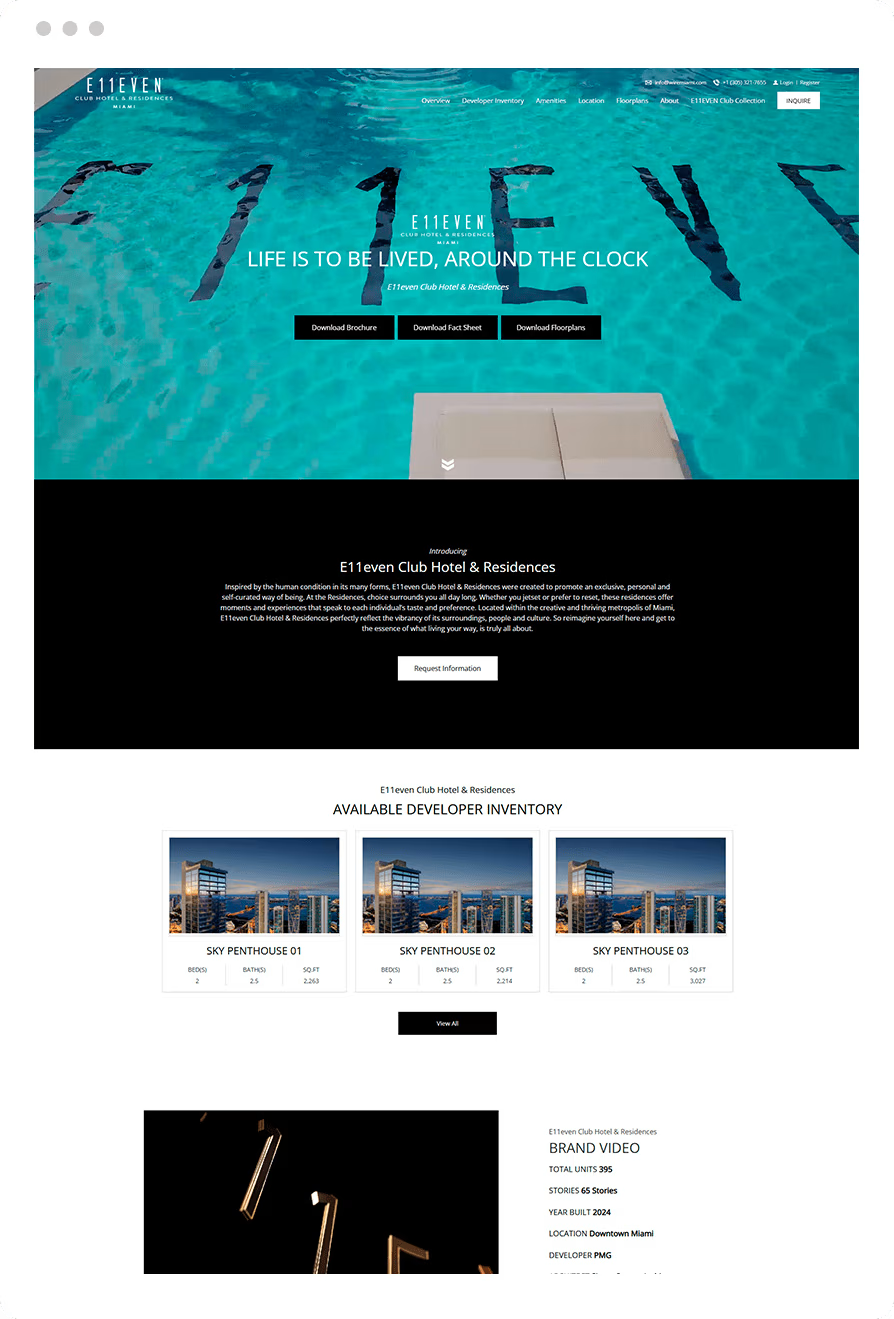
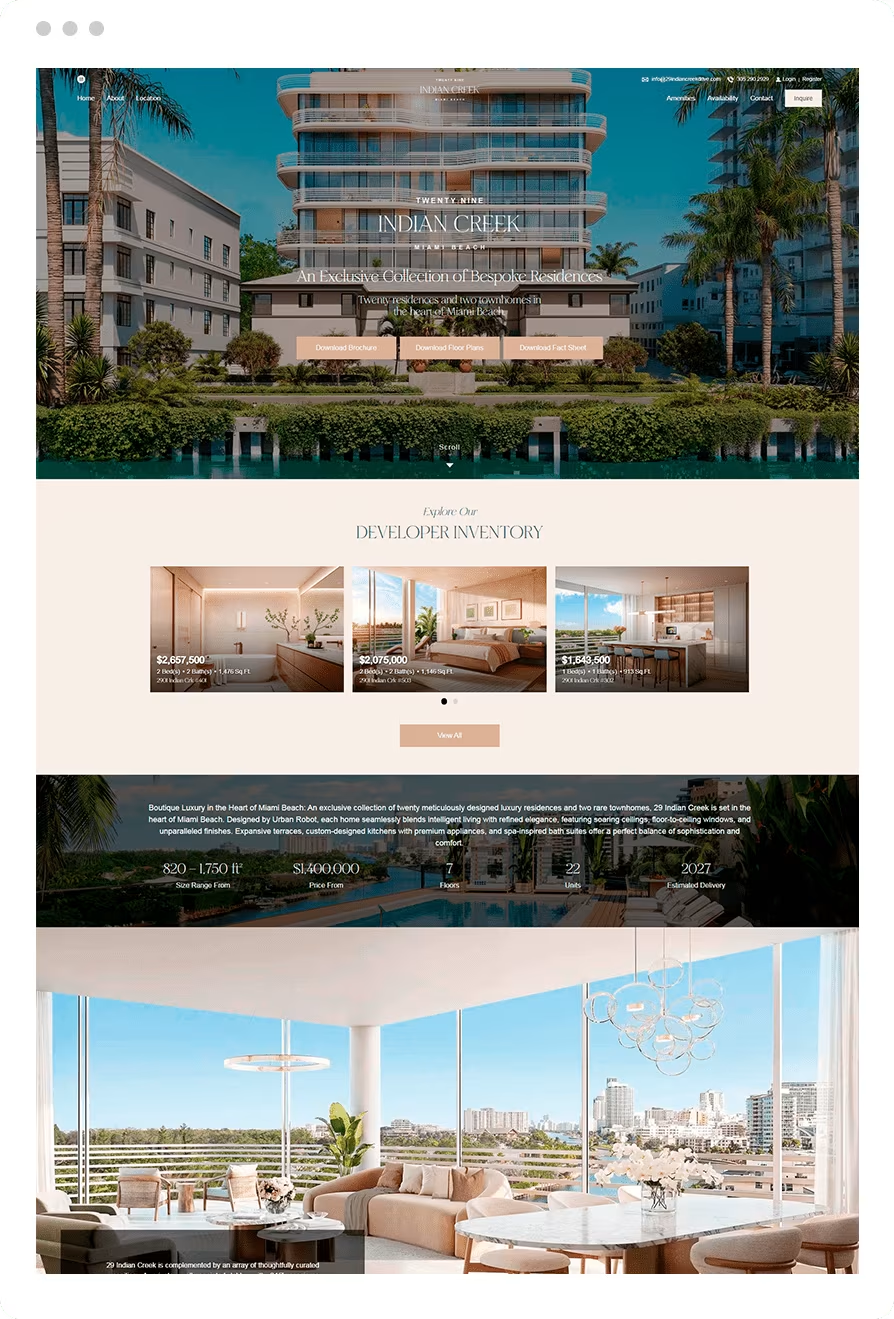
Built for Your Brand. Structured for Long-Term Control.
Codflux brings strategy, real estate website designers, development, and launch planning into one coordinated process. The goal is a site your team can use, improve, and connect with the rest of your marketing. Website ownership, hosting, software licensing, account access, and data-export terms.
Design
Define the audience, visual direction, content hierarchy, page goals, and conversion journey before production begins.
Build
Develop responsive pages, property-search experiences, forms, integrations, tracking, and essential technical foundations for the agreed scope.
Grow
Use search insights, campaign data, conversion signals, and pipeline feedback to identify practical improvements after launch.
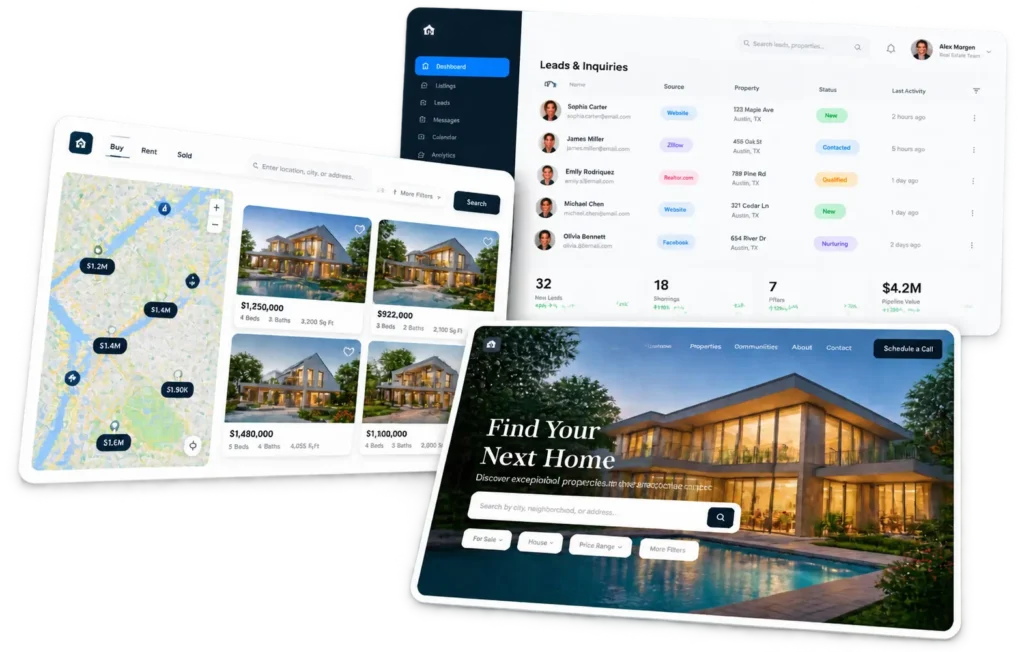
Types of Real Estate Websites We Build
Websites for Real Estate Agents
Create a professional home for your listings, local expertise, buyer and seller services, testimonials, and personal brand. The site can support property discovery and lead capture while reducing reliance on shared profiles and third-party portals.
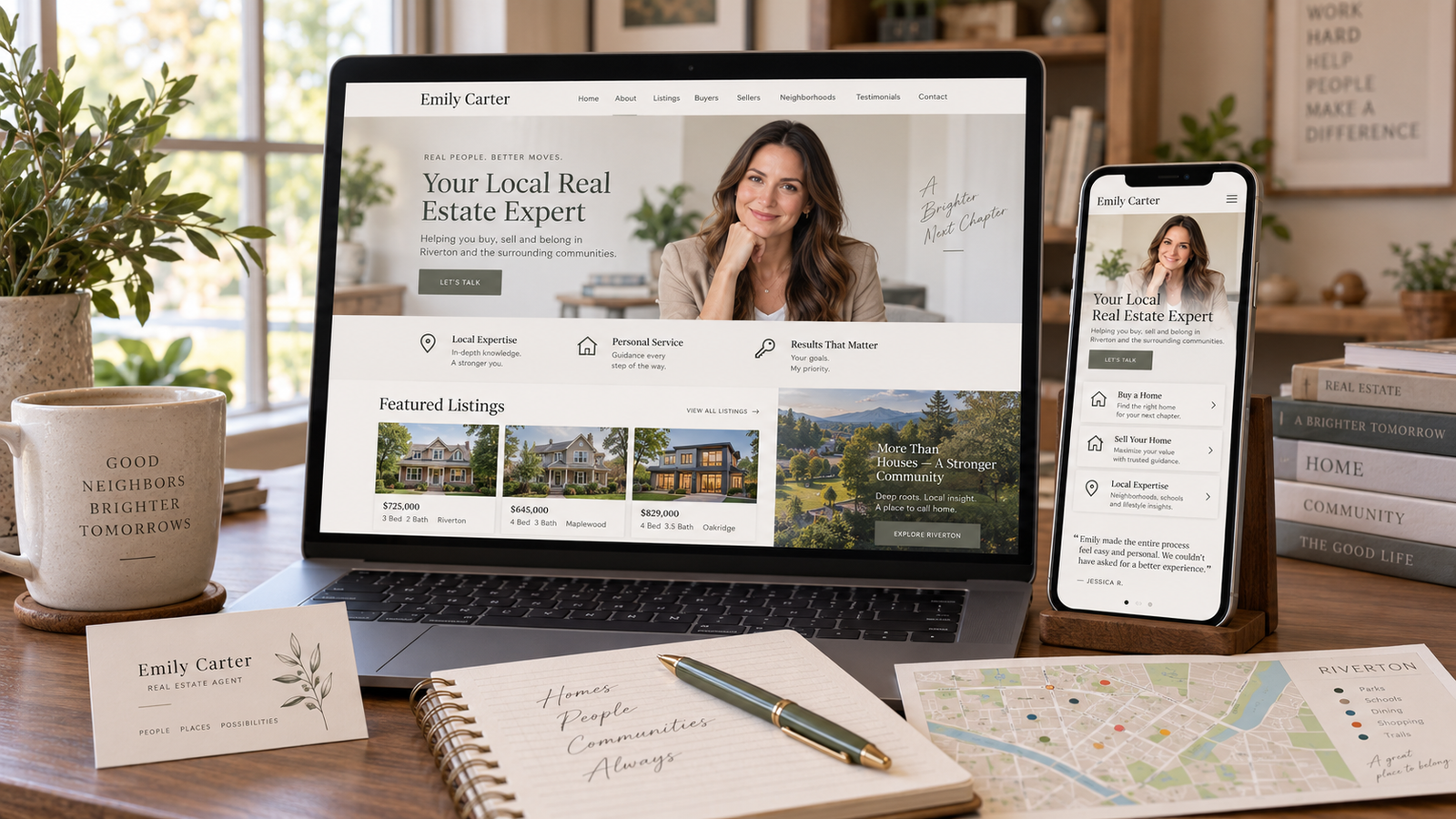
Websites Built for Growing Real Estate Teams
Give the team one consistent brand experience while creating clear paths for communities, services, listings, agents, and inquiries. Routing and CRM planning can help direct each opportunity to the appropriate team member.
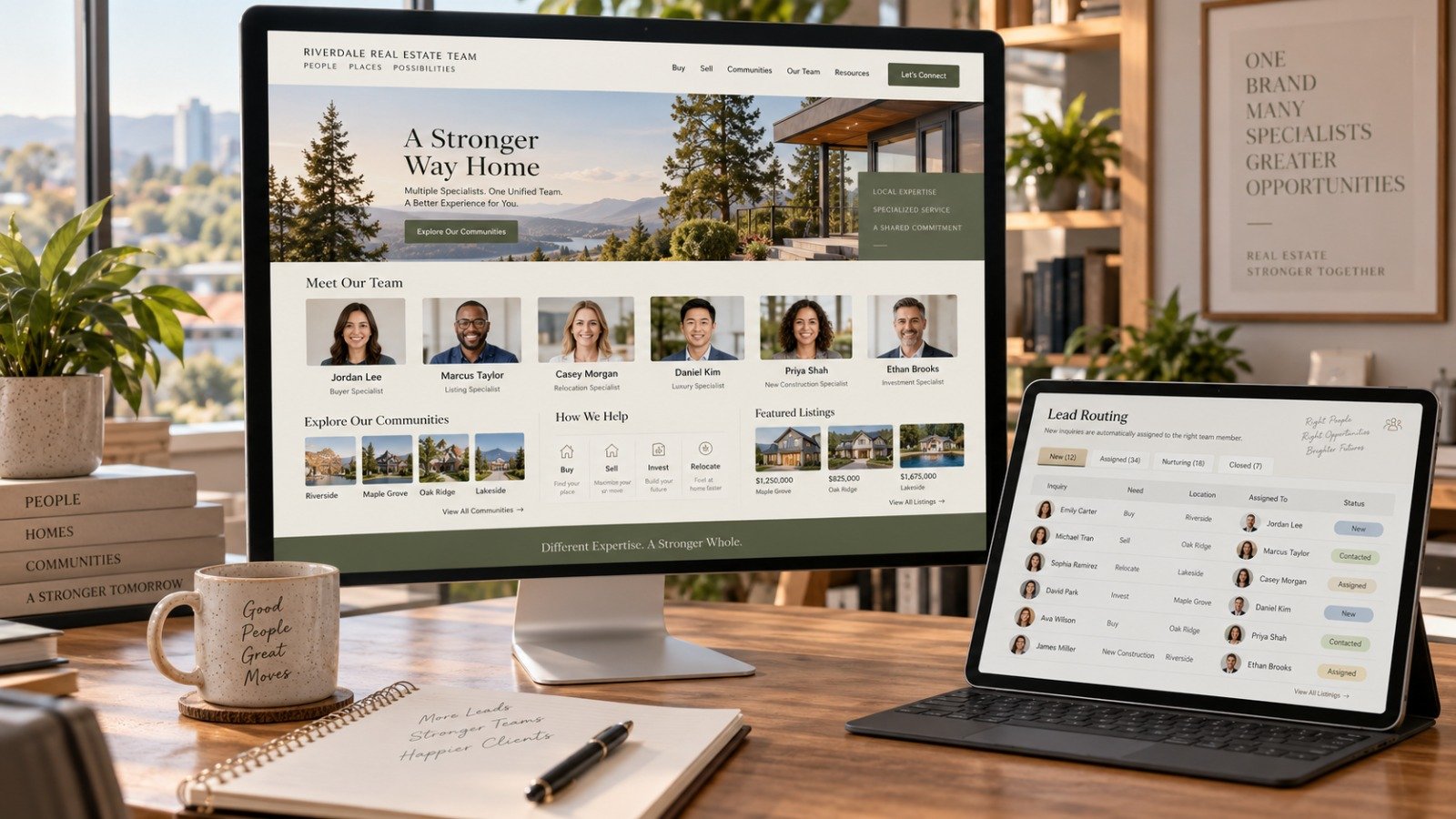
Scalable Websites for Real Estate Brokerages
Organize offices, markets, agents, listings, recruiting content, resources, and lead pathways within a structured website experience. Permissions, reporting, data feeds, and account access depend on the selected technology and approved scope.
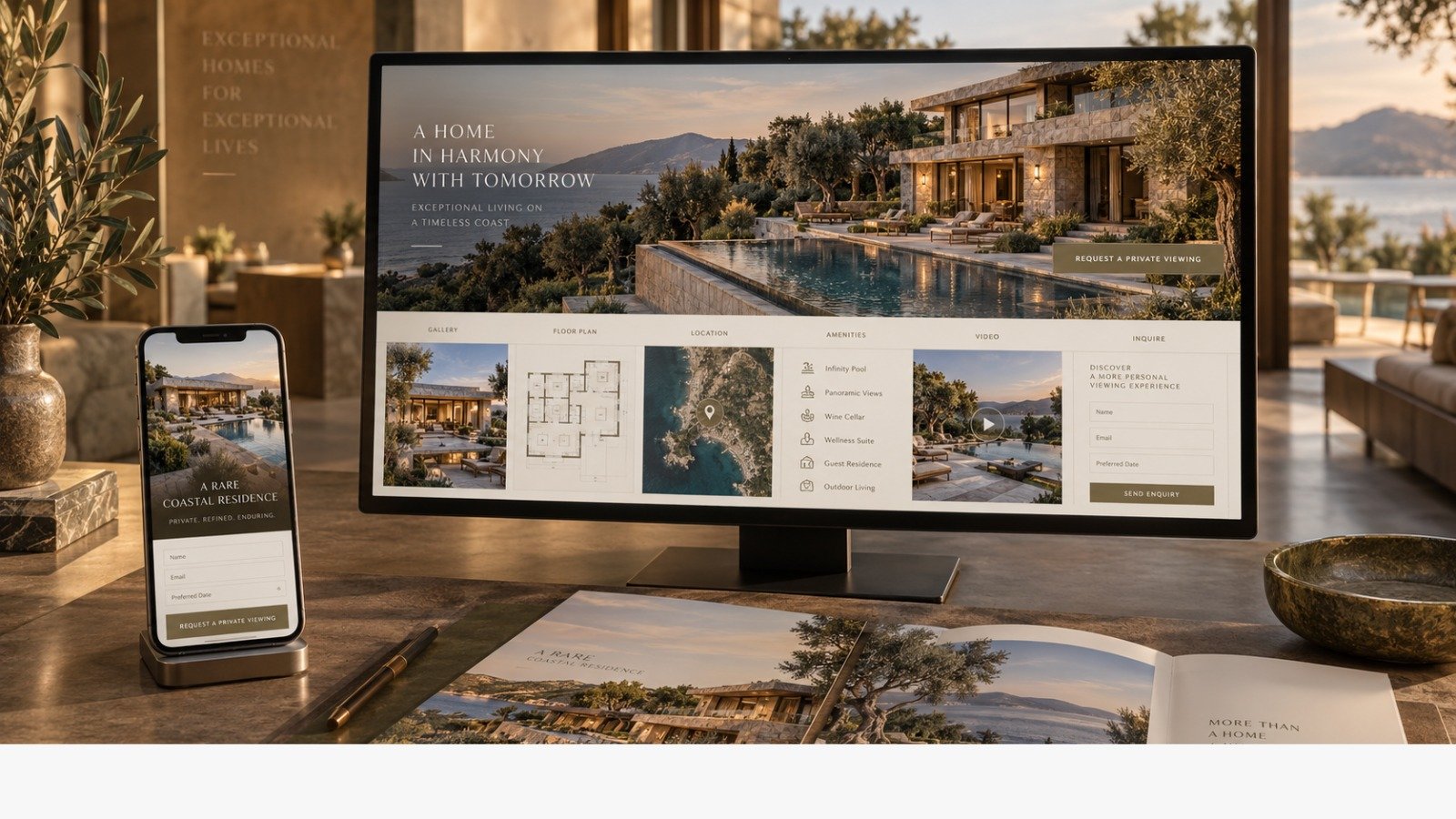
Custom Real Estate Websites for Distinct Brands
Build around a specific market position, customer journey, service model, or design direction when an off-the-shelf structure will not support the brand. Scope may include custom page systems, content architecture, integrations, and conversion planning.
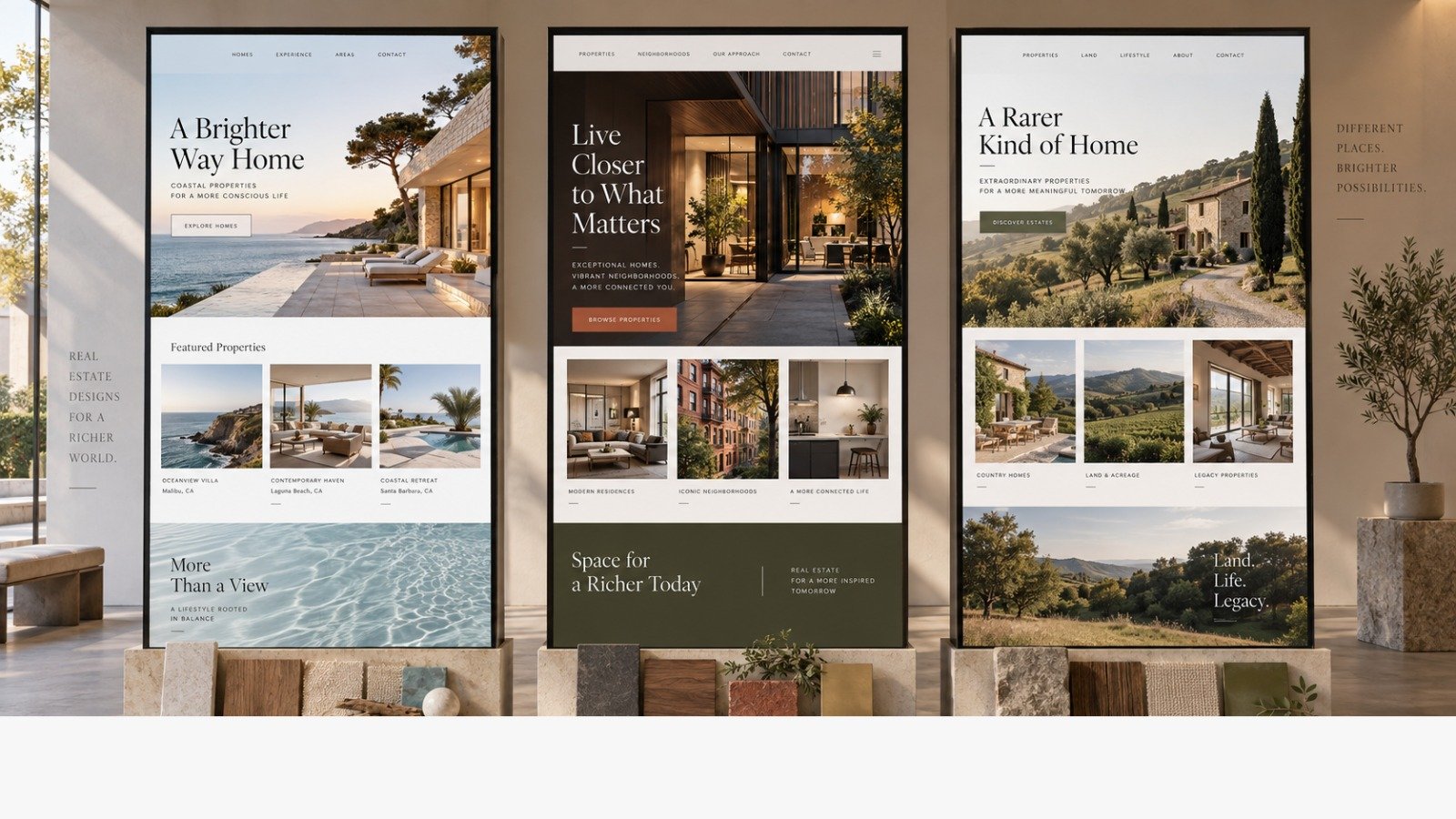
Focused Websites for Individual Properties
Present a development, luxury listing, or signature property with dedicated messaging, media, location details, inquiry paths, and campaign-ready landing pages. Available features depend on the property, marketing plan, platform, and content provided.
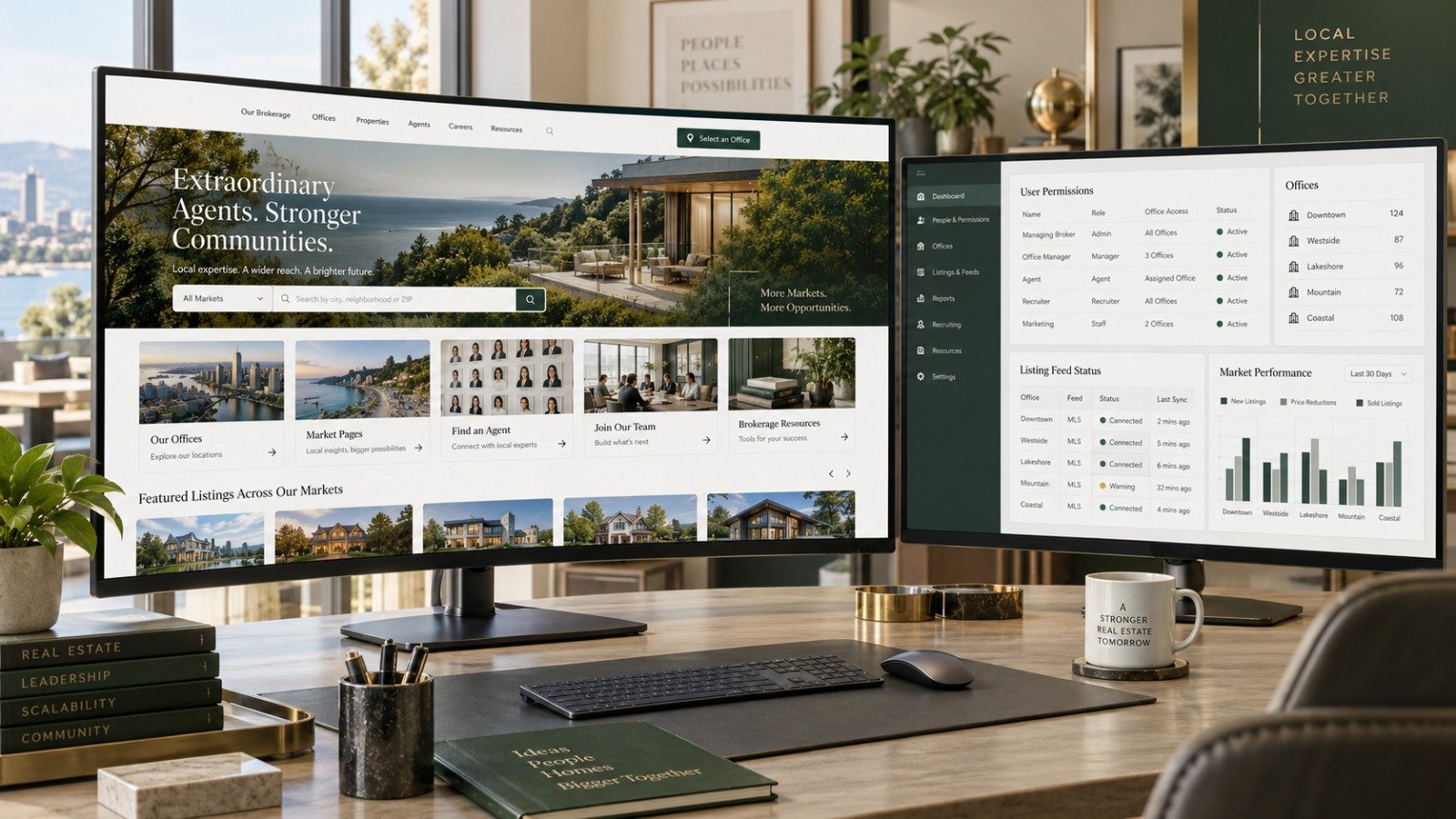
Types of Real Estate Websites We Build
Websites for Real Estate Agents
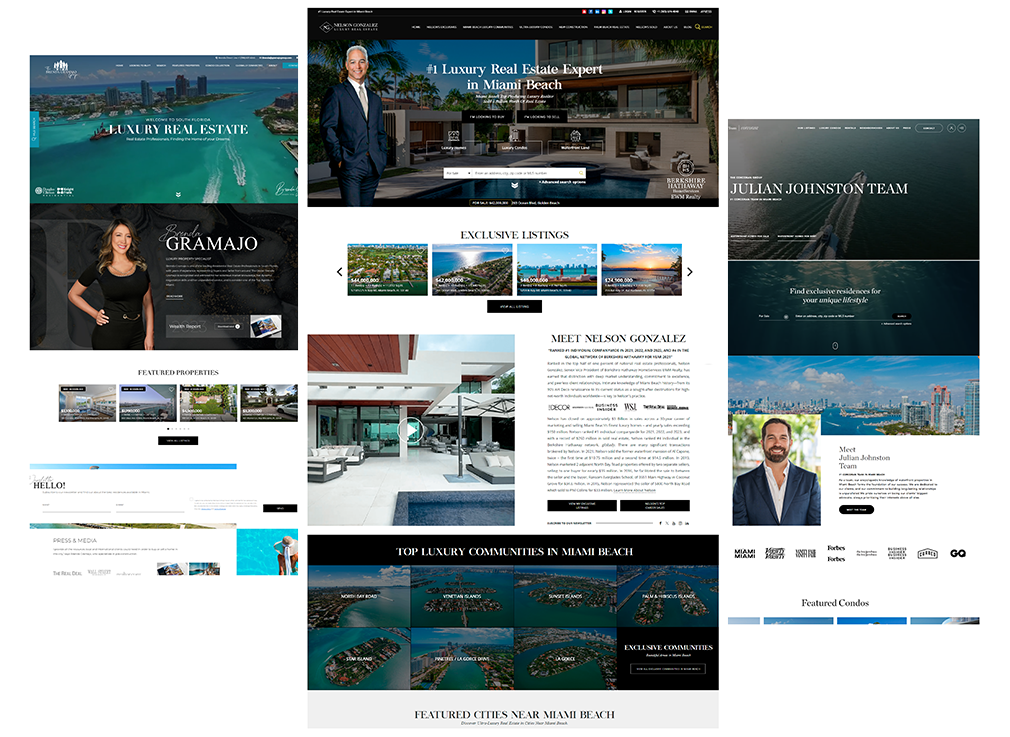
Create a professional home for your listings, local expertise, buyer and seller services, testimonials, and personal brand. The site can support property discovery and lead capture while reducing reliance on shared profiles and third-party portals.
Websites Built for Growing Real Estate Teams
Give the team one consistent brand experience while creating clear paths for communities, services, listings, agents, and inquiries. Routing and CRM planning can help direct each opportunity to the appropriate team member.
Scalable Websites for Real Estate Brokerages
Organize offices, markets, agents, listings, recruiting content, resources, and lead pathways within a structured website experience. Permissions, reporting, data feeds, and account access depend on the selected technology and approved scope.
Custom Real Estate Websites for Distinct Brands
Build around a specific market position, customer journey, service model, or design direction when an off-the-shelf structure will not support the brand. Scope may include custom page systems, content architecture, integrations, and conversion planning.
Focused Websites for Individual Properties
Present a development, luxury listing, or signature property with dedicated messaging, media, location details, inquiry paths, and campaign-ready landing pages. Available features depend on the property, marketing plan, platform, and content provided.
Built to Strengthen Your Brand and Convert More Interest
Brand-Led Website Strategy
Start with your market, audience, offer, and goals. Content and design decisions are then organized around the information visitors need before they contact you.
IDX and Property Search Planning
Shape property discovery around relevant search behaviors, locations, and listing content while respecting MLS requirements, provider capabilities, data availability, and approved platform features.
Practical Support Beyond Launch
Establish who manages updates, support requests, hosting, technical maintenance, content changes, and ongoing improvements before launch so responsibilities remain clear.
Conversion-Focused Page Structure
Use focused calls to action, relevant forms, logical navigation, and landing-page alignment to turn more qualified visits into conversations without forcing unnecessary friction.
Local SEO Foundations
Support discoverability with useful service and location content, clear site architecture, internal linking, on-page optimization, and technical foundations designed for sustained improvement—not guaranteed rankings.
CRM and Lead Routing Connections
Plan how inquiries move from website forms into the selected CRM, team, or follow-up process. Automation can support speed and consistency while personal conversations remain essential.
Real Estate Website Development Services
Bring approved designs to life with responsive layouts, reusable components, form functionality, tracking, and integrations matched to the confirmed technical requirements.
Flexible Platform Options
Real estate WordPress websites may be considered when WordPress matches the project’s editing, integration, security, maintenance, and ownership requirements.
Measurement and Pipeline Visibility
Connect analytics, conversion events, campaign sources, and CRM activity where available so your team can better understand which channels and pages create meaningful opportunities.
Ready to Build a Better Real Estate Website?
Talk with Codflux about your audience, current website, growth priorities, property-search needs, and follow-up process. Our real estate web design services help define a practical scope for design, content, development, integrations, and measurement—without forcing features that do not serve the strategy.
Why Choose Codflux for Real Estate Web Design Services
We begin with your audience, positioning, services, markets, lead sources, and conversion goals. This helps the website support the business model instead of becoming a disconnected design project.
The visual system and page structure are shaped around your approved brand direction and content needs. Reusable components can keep the experience consistent as the website expands.
Property search, registration points, forms, and calls to action are planned together. Final capabilities depend on MLS rules, the IDX provider, available data, and selected platform.
Where supported, form submissions can be routed into approved CRM and communication workflows. Automation assists response and organization; it does not replace the agent or team’s personal follow-up.
The proposal should identify deliverables, responsibilities, support, hosting, licensing, account access, third-party costs, and ownership terms so your team understands how the website will operate after launch.
Frequently Asked Questions
Pricing depends on the number of pages, design complexity, content needs, IDX requirements, integrations, platform, and ongoing support. Codflux prepares a defined scope after discovery so you can review the deliverables, assumptions, third-party costs, and payment terms before work begins.
Possible ongoing costs may include hosting, software licenses, IDX or MLS-related services, maintenance, support, premium tools, and third-party subscriptions. Your proposal should separate one-time project fees from recurring charges and identify which accounts are owned or managed by each party.
The process should establish an approved direction before full production through discovery, references, wireframes, or design concepts. Revision rounds, approval points, and change-request terms are documented in the project scope so feedback can be addressed before development is finalized.
Codflux can connect real estate website design with search strategy, landing pages, paid advertising, CRM planning, lead routing, follow-up workflows, conversion tracking, and reporting when those services fit the engagement. Confirm the selected services and channels in the approved scope.
Timing varies with project size, content readiness, design approvals, IDX or integration requirements, feedback speed, and technical complexity. A project schedule should define milestones, client responsibilities, review windows, and dependencies before production starts.